
Originally posted on Medium.
I've had an unusual path through programming education: I started a computer science degree nearly a decade ago, dropped out, spent years teaching myself on and off, and then enrolled in DigitalCrafts in November 2017. That gives me a somewhat unique perspective on what a bootcamp actually provides when you already know how to code.
The internet age makes self-teaching feasible. "Just Google it" solves most questions. That accessibility has enabled a lot of people to land software jobs without traditional credentials. I initially pursued that route — but I felt something missing. This is my attempt to explain what that was.
It's Lonely To Play With Yourself
Solo learning creates isolation. You can build things, but there's nobody to talk to about what you're building. No one to bounce ideas off of, no one who gets excited about the same obscure problem you just solved.
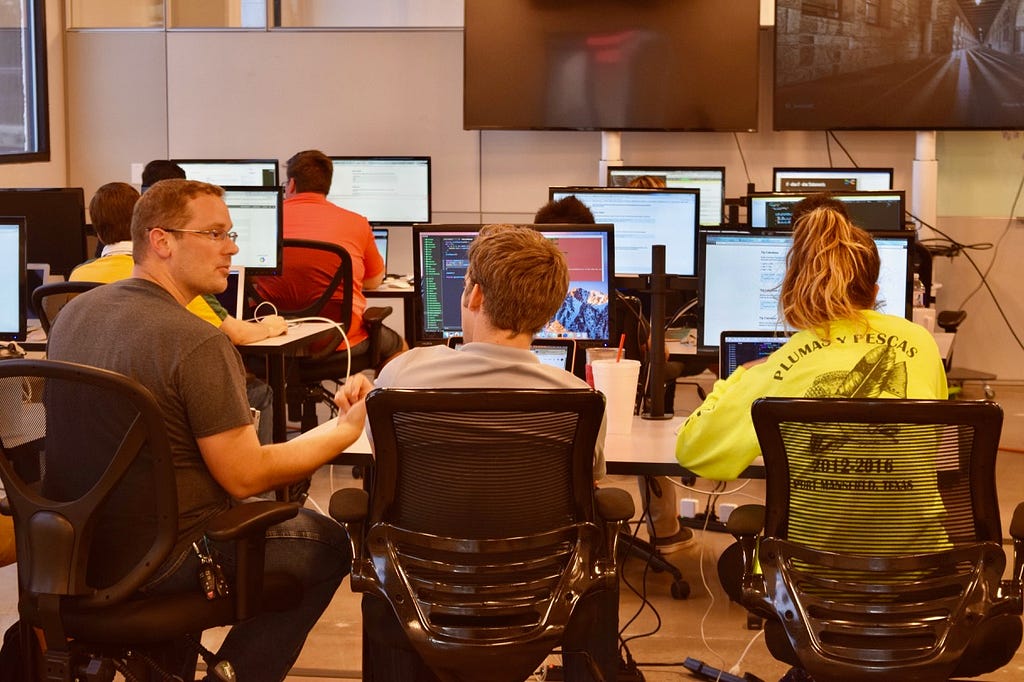
Bootcamp immersion forces interaction with peers who are pursuing identical goals. Networking skills — crucial for employment — are impossible to develop independently. Group projects teach teamwork, which is the one skill you simply can't replicate alone.
DigitalCrafts brought in guest speakers from the industry starting in the first week. That kind of access doesn't happen when you're learning by yourself at 2am.
Your Code Is Probably Ugly
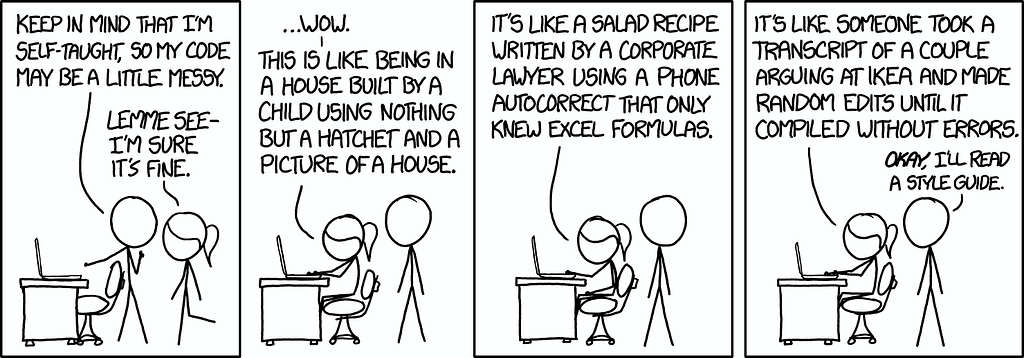
Self-taught programmers tend to prioritize functionality over code quality. When you're learning alone, readability matters less than getting the thing to work. The result is spaghetti code — functional, but hard to read and harder to maintain.
Observing peer code and receiving feedback on your own forces you to learn the soft rules: naming conventions, spacing, structure, and best practices that aren't covered in any tutorial but are silently judged in every code review.
Leave Your Ego At The Door
Self-taught students often arrive over-prepared compared to complete beginners. You might be familiar with half the curriculum already. The temptation is to disengage when material feels familiar — resist it.
When Python was formally covered, I used the extra time to learn Django independently. If you're over-prepared, exceed the requirements. There are always gaps to fill.
One thing worth saying directly: bootcamp isn't a competition. Having a technical advantage over your peers doesn't make you the winner. Intimidating classmates with advanced knowledge doesn't help anyone. Inspiration — showing them that sustained effort leads somewhere — is worth infinitely more.
Structure and Momentum
This is the real answer to the question in the title.
Self-paced learning has one critical flaw: decision paralysis. The options are overwhelming. When I was self-teaching, I spent time on EJS without knowing that React or Angular would matter far more. I had no way to know. Bootcamp curriculum eliminates that paralysis by providing a predetermined, curated sequence of relevant technologies.
The second advantage is momentum. Self-paced learning permits procrastination. Bootcamp enforces daily coding engagement. Instead of studying one hour every week, you code for hours every day. The difference in output is not proportional — it's exponential.
If you're self-taught and considering a bootcamp, the technical content probably won't surprise you much. What will surprise you is how much faster you grow when you're surrounded by people doing the same thing, with structure forcing you forward every single day.